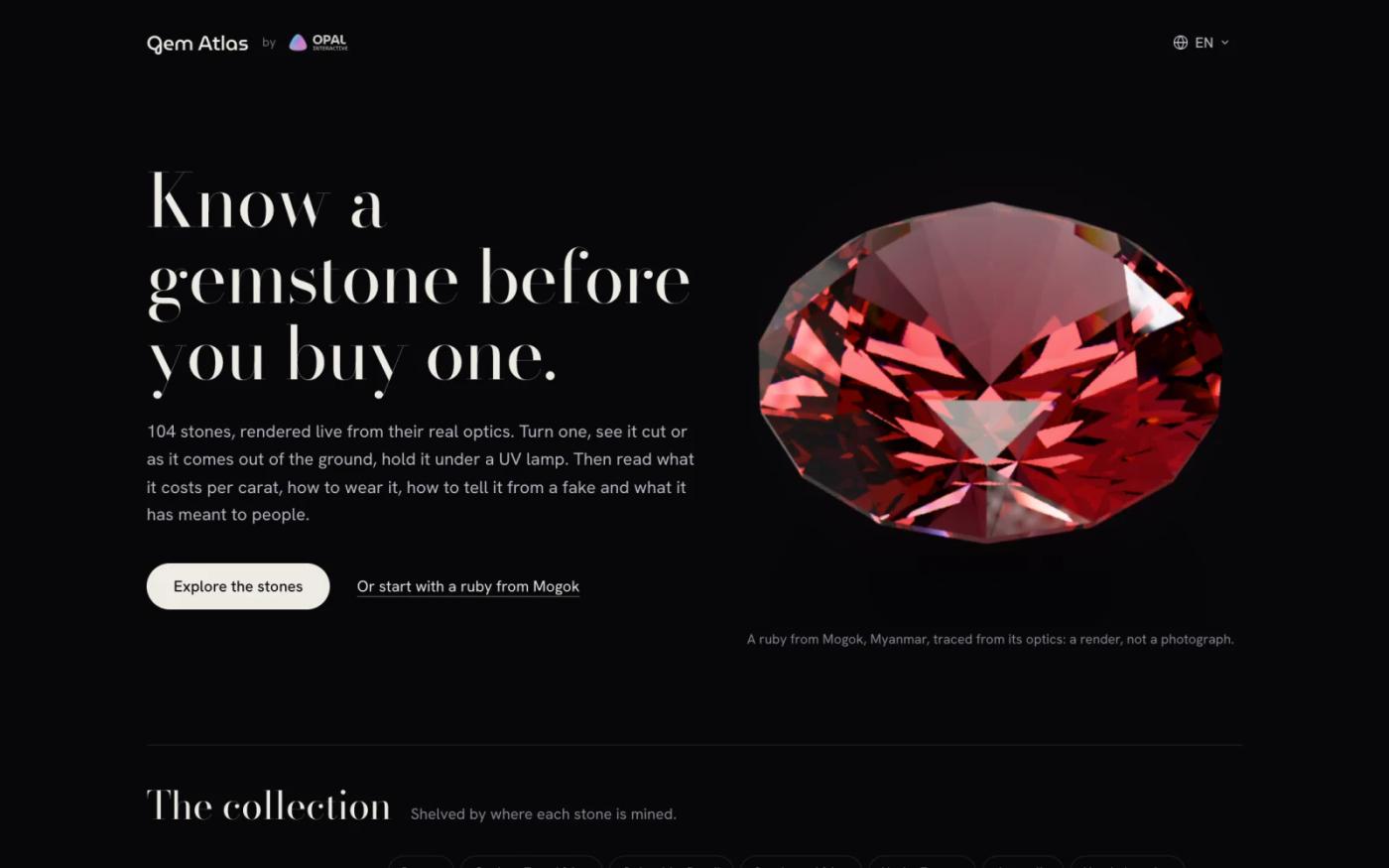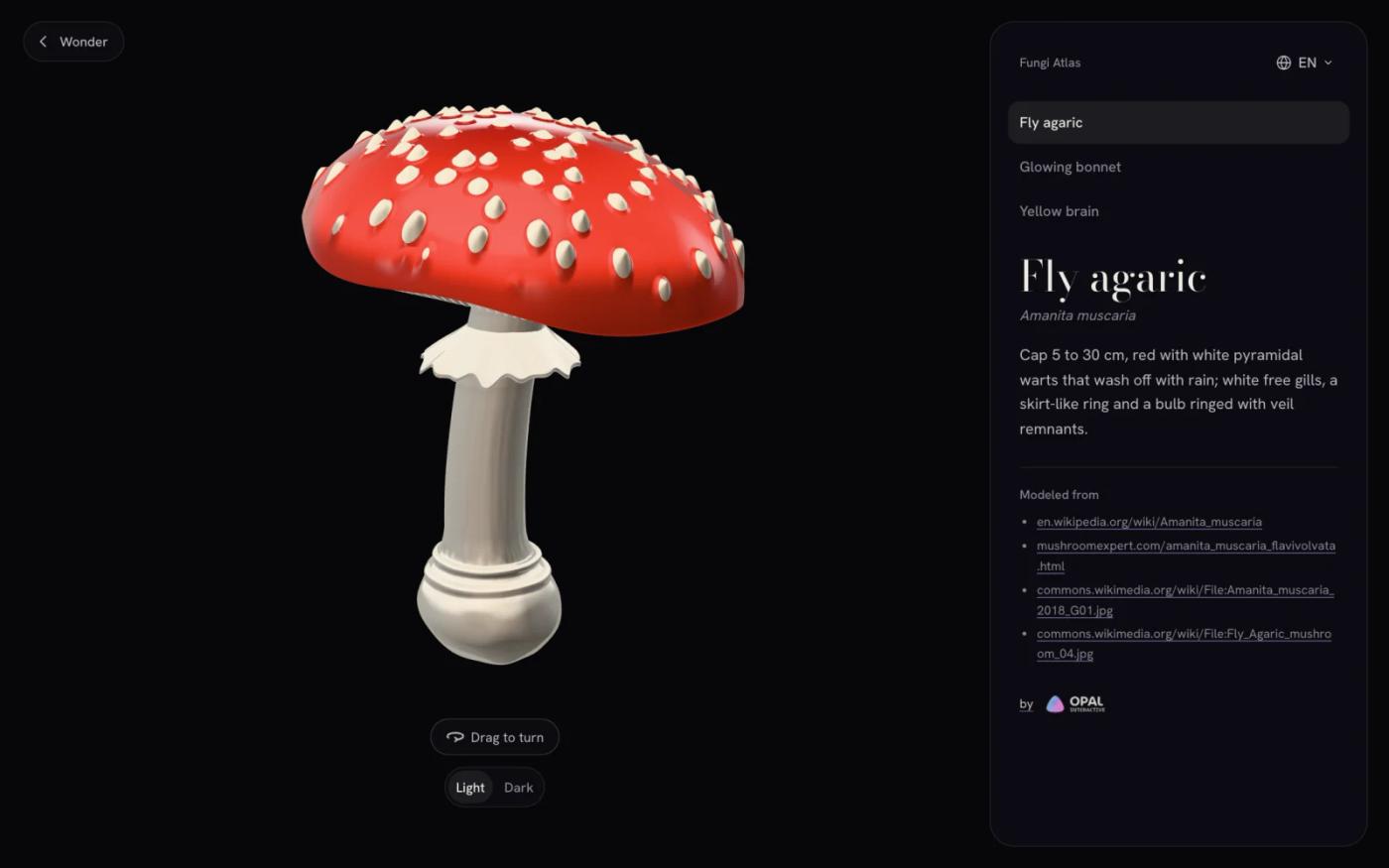


Wonder is an internal project from Opal Interactive: a family of interactive atlases where every subject is rendered live in the browser from how it really looks and behaves, instead of photographed. Gem Atlas covers 104 gemstones, cut and raw, with the practical information a buyer needs before paying for one. Fungi Atlas brings the same studio to mushrooms. In English, Spanish and Portuguese.
Every stone runs through a spectral path tracer built in-house (WebGPU, with a WebGL2 fallback for older devices) that follows the real optics of each species: dispersion, pleochroism, how a UV lamp makes a stone glow or leaves it inert. Turn a stone, switch it between its cut and raw form, pass a UV torch over it, and the render responds, because it comes from physics, not from swapping one picture for another. Next to the render, each stone has its price per carat, how to care for it, how to tell it from a fake and what it has meant to people.
Wonder began as Gem Bible, a gemstone library shaped with input from people in the gemstone trade, dealers and collectors, on what a buyer needs to know before paying for a stone. As the render engine grew, the library became Gem Atlas, the first atlas in Wonder, and gembible.opalinteractive.io now leads there.
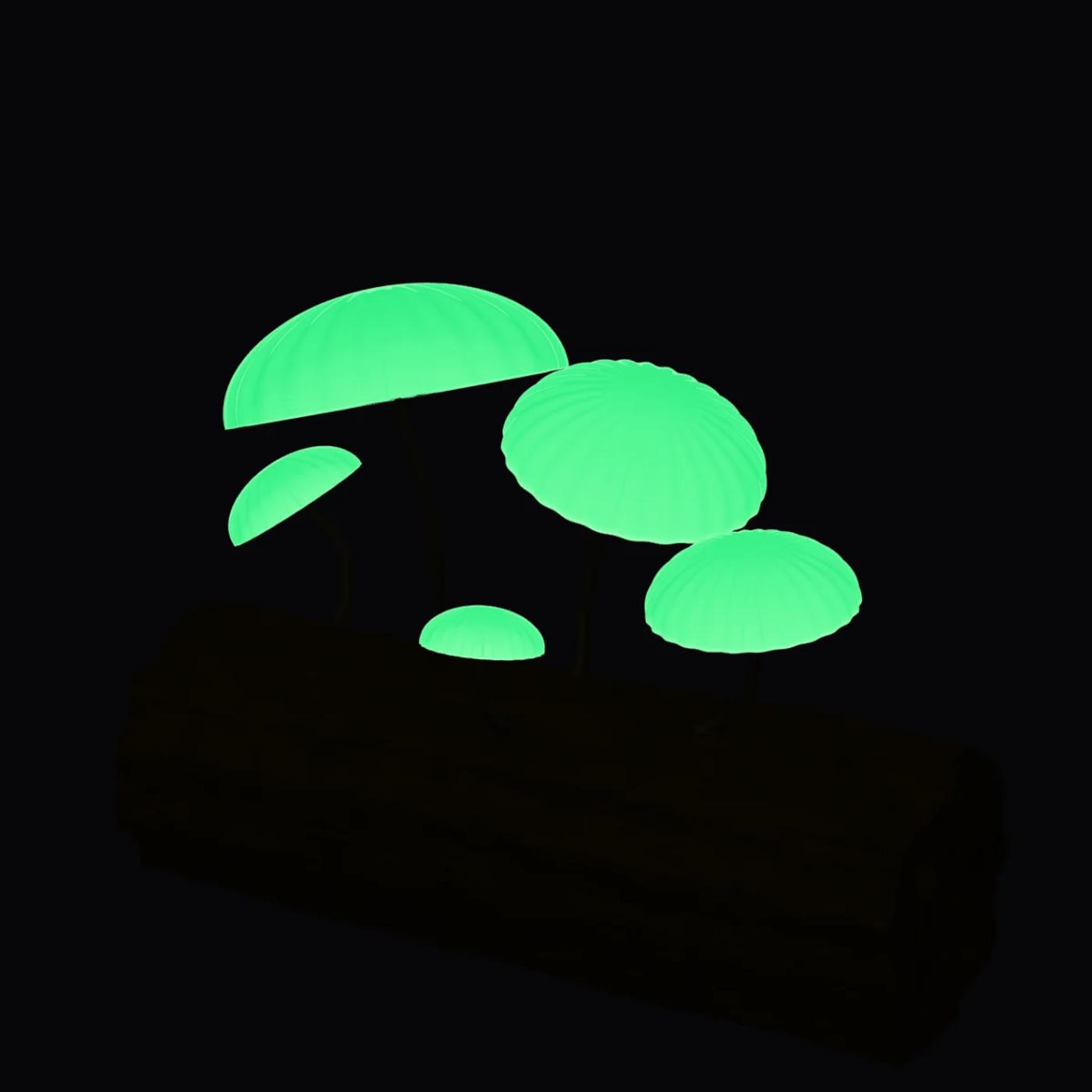
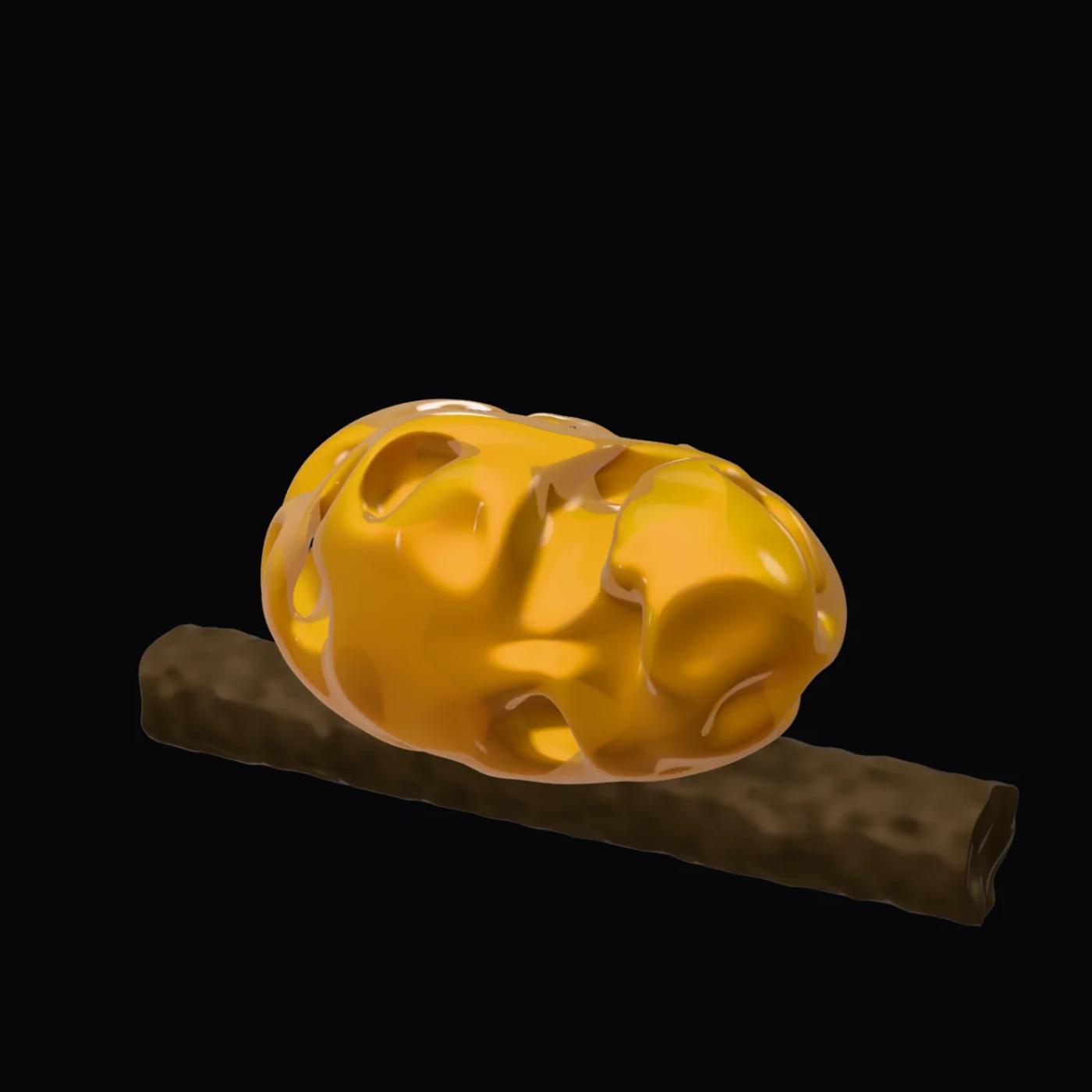
Fungi Atlas models three species, the fly agaric, the glowing bonnet and the yellow brain, from published descriptions and reference photos, lit by the same studio as the gems. Turn each one, switch the lights off and the glowing bonnet shines on its own, the way it does on a forest floor at night. It is made for learning and browsing, not for identifying mushrooms or telling whether one is safe to eat.
The same approach works for what your company makes or offers: a product people can turn, open and try in the browser before they buy, rendered live instead of shown in a flat photo. If you want your product or service as an interactive website, tell us about it.